Key Takeaways
- You must be licensed to legally do most plumbing work in North Carolina, or work under someone who is.
- The basic path is: get training → gain hands-on experience → apply → pass your state exam → activate and maintain your license.
- You can start through trade school, community college, or an entry-level job/apprenticeship – there’s no single “perfect” path.
- Expect to spend a year or more building on-the-job experience before you qualify for your exam.
- Once licensed, you can grow into higher-level licenses, better pay, or even start your own plumbing business in NC.
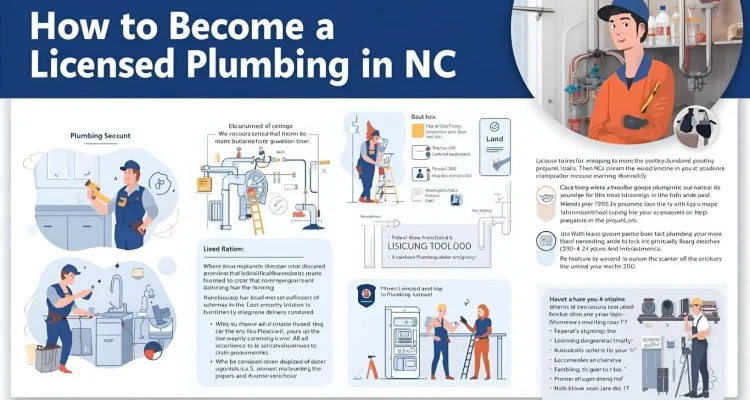
To become a licensed plumber in North Carolina, you typically start by getting basic plumbing training (through a trade school, community college, or entry-level job), then build full-time, supervised work experience. Once you meet the state’s experience requirements, you apply to the North Carolina State Board of Examiners of Plumbing, Heating & Fire Sprinkler Contractors, take and pass the plumbing licensing exam, and then activate your license by paying the required fees. From that point on, you must renew your license on time and follow state codes and regulations.
Introduction: How to Become a Licensed Plumber in NC (Without Losing Your Mind)
If you’ve ever stared at a leaking pipe at 11:30 p.m. and thought, “People get paid good money to fix this… maybe that should be me,” you’re not alone.
How to become a licensed plumber in NC is a question a lot of folks ask when they’re tired of dead-end jobs and want a hands-on career that actually matters. Pipes don’t care about the economy, market trends, or your Wi-Fi connection – they just quietly run your home until one day they don’t, and that’s where plumbers step in.
In North Carolina, plumbing is a licensed trade, which is good news for you. It means there’s a clear path to follow and a real ceiling on how many “I watched a YouTube video once” people can compete with you.
In this guide, I’ll walk you through:
- What NC plumbing licenses are and what they allow you to do
- How to get your experience and training without going broke
- What the state exam really looks like (and how not to panic over it)
- How to grow your career from entry-level tech to business owner
And I’ll sprinkle in a bit of real-life perspective – including the moment I realized plumbers make more in one emergency call than I spent on that “decorative” faucet I broke installing myself.
Understanding Plumber Licensing in North Carolina
Before you start buying tools and practicing pipe wrench poses in the mirror, it helps to understand what “licensed” actually means in NC.
What a Plumbing License Lets You Do
In North Carolina, a plumbing license gives you the legal right to:
- Install and repair water supply lines, drain/waste/vent systems, and fixtures
- Pull permits and be listed as the qualified person on projects
- Work independently or run a plumbing business (with the right class of license)
Without a license, you can:
- Work under a licensed contractor as an employee or apprentice
- Do very minor tasks that don’t count as full plumbing work
The big picture: if you want plumbing to be your career and not just “helping out a buddy,” you need that license.
Main Types of NC Plumbing Licenses (In Simple Terms)
The state board offers several categories. In everyday language, the big ones are:
- Plumbing Technician –
- Works on plumbing systems
- Must be tied to a licensed contractor (you’re part of their team)
- Plumbing Contractor (P-I / P-II) –
- P-I: Can work on almost any type of building
- P-II: Focused on single-family residential
- These are the folks who run the show, pull permits, sign contracts
- Restricted Limited Plumbing Contractor (RLP) –
- Narrower scope (certain exterior piping and systems)
- Good if you’re focused on specific types of work
All of these fall under the North Carolina State Board of Examiners of Plumbing, Heating & Fire Sprinkler Contractors, which is the official licensing body you’ll deal with.
Checking Your Eligibility Before You Dive In
Let’s talk about whether this path actually fits your life right now.
Basic Requirements
Typically, you should:
- Be at least 18 years old for licensing and full-time employment
- Have a high school diploma or GED (or be ready to get one)
- Have legal authorization to work in the U.S.
Helpful Skills (Beyond “I Can Hold a Wrench”)
Being a good plumber is more than just brute force:
- Problem-solving
- Every job is a puzzle: Where is the leak? Why is the pressure low?
- Communication
- You’ll explain issues to homeowners who are stressed and half-panicked.
- Physical stamina
- Expect to crouch in crawl spaces, work in attics, and haul materials.
- Patience and detail orientation
- One wrong connection, and you might be back in the same house tomorrow.
If you read this and think, “Yup, that sounds like me,” you’re off to a strong start.
Choosing Your Training Path: School, Job, or Both?
There’s no single “right” way to start – just the path that fits your budget, schedule, and learning style.
The Main Routes into Plumbing
Here’s a quick comparison to help you see the options:
| Path | Typical Duration | Cost Level | Best For |
|---|---|---|---|
| Trade/Technical School | 6–18 months | Moderate | People who like structured classes + hands-on labs |
| Community College Program | 1–2 years | Moderate | Those wanting a diploma/degree plus plumbing training |
| Entry-Level Job/Apprentice | Multi-year | Low upfront | People who want to earn while they learn |
Trade School or Community College
Pros:
- Structured curriculum that covers codes, safety, and theory
- Access to experienced instructors and lab setups
- Often includes help connecting you with local employers
Cons:
- Tuition and books (though financial aid is often available)
- You may still need additional on-the-job hours before the state exam
On-the-Job Training / Apprenticeship
Pros:
- You get paid while learning
- Real-world experience – nothing teaches like crawling under a 1950s house
- You build relationships with contractors who can later vouch for your experience
Cons:
- The quality of training depends heavily on who you work for
- You’ll have to be proactive about studying codes and test prep
Most people end up with a hybrid: a bit of school for the foundation, and a lot of experience working under a licensed contractor.
Finding and Starting a Plumbing Apprenticeship in NC
Landing that first job is often the part people worry about most.
Where to Look
You can start by:
- Asking local plumbing companies if they’re hiring helpers or apprentices
- Checking job boards (Indeed, ZipRecruiter, etc.) for “plumber helper” roles
- Talking to your trade school or community college career office
- Asking friends, family, or neighbors who work in construction or HVAC
What Your First Months Will Really Look Like
Honestly? You’ll probably:
- Carry tools, pipe, and materials
- Clean up the work area
- Watch experienced techs and ask questions
- Gradually start cutting, measuring, and making simple connections
Remember: everyone starts out as “the new person with the bucket.” The key is to:
- Show up on time (huge)
- Listen more than you talk
- Ask smart questions
- Own your mistakes and fix them
That’s how you turn “grunt work” into real, logged experience toward your license.
Meeting North Carolina’s Experience Requirements
The state doesn’t just hand out licenses to anyone who’s watched a few TikToks about PEX.
You’ll need a solid block of full-time, supervised plumbing experience before you can sit for your exam. The exact hour requirements depend on the license category, but think in terms of months to a few years, not weeks.
Tracking Your Hours Like a Pro
To make your application smooth later on:
- Keep a simple work log with:
- Employer name and contact info
- Start and end dates
- Approximate hours worked per week
- Types of tasks you performed
- Save copies of:
- W-2s or 1099s
- Any company training certificates
- Any emails or letters confirming your role
When it’s time to apply, your supervisor or employer will often need to fill out forms confirming your experience, so being organized now saves you a massive headache later.
Preparing for the NC Plumbing License Exam
This is the part that scares people, but it doesn’t have to.
What the Exam Typically Covers
Expect questions on things like:
- North Carolina plumbing codes and regulations
- Pipe sizing, venting, and drainage design
- Water heaters, fixtures, and backflow prevention
- Safety rules and jobsite best practices
- For contractors, some business and law topics
Building a Study Game Plan
Here’s a simple way to tackle it:
- Get the right books and resources
- Current plumbing code book
- Any recommended state exam prep manuals
- Practice exams or online question banks
- Build a realistic schedule
- 30–60 minutes on weeknights
- A longer block on the weekend
- Study smart, not just long
- Focus on topics that show up often in practice questions
- Practice using the code book quickly – the exam is timed
- Simulate the real test
- Do timed practice blocks (e.g., 50 questions in 1 hour)
- Practice staying calm while the clock is running
Pro tip: the exam is as much about knowing where to look in the code book as it is about memorizing everything by heart.
Applying for Your North Carolina Plumbing License
When you feel comfortable with your knowledge and experience, it’s paperwork time.
What the Application Usually Includes
You’ll typically need to:
- Fill out an application form for the type of license you want
- Provide documented work experience (forms from your employer/supervisor)
- Submit background check information if required
- Include supporting documents like:
- W-2 or 1099 forms
- Employment history
- Any relevant training transcripts
- Pay the application and exam fees
The application goes to the NC State Board of Examiners of Plumbing, Heating & Fire Sprinkler Contractors for review. If approved, they’ll send you instructions on how to schedule your exam at one of the state testing centers.
Taking the Exam and Getting Your Results
On test day, treat it like a serious job – because it is.
What to Expect on Exam Day
- Arrive early with your ID and any allowed materials (like your code book)
- You’ll take the exam on a computer in a testing center
- There will be a mix of questions on codes, calculations, and real-world scenarios
- The test is timed, so pace yourself
After you finish, you’ll either get your results right away or within a short window (depending on the testing system). If you pass, you’ll move on to activating your license by paying the appropriate license fee within the deadline given.
If you don’t pass the first time, it’s not the end of the world. Many people need a second shot. The key is to:
- Review the sections you struggled with
- Do more targeted practice questions
- Reschedule while the info is still fresh
Upgrading Your License and Growing Your Career
Once you’re in the field with a basic license, the path opens up.
Ways to Level Up
You can:
- Move from technician to contractor (P-I or P-II)
- Specialize in:
- High-end residential systems
- Commercial work
- Backflow prevention and testing
- Eventually start your own plumbing company
As you upgrade, you’ll generally need:
- More documented experience
- Passing scores on additional exams
- Proof you can handle larger, more complex work safely
Staying Compliant: Renewals, Codes, and Professionalism
Getting licensed is step one. Staying licensed is the real game.
Renewing Your License
NC licenses are renewed regularly (often annually) and require:
- Submitting a renewal form
- Paying the renewal fee on time
Miss that, and you may face late fees or a lapsed license.
Keeping Up with Codes
Plumbing codes aren’t carved into stone tablets – they update. To stay sharp:
- Follow code updates from the state
- Stay in touch with local inspectors and trade groups
- Take occasional classes or seminars, especially when big code changes roll out
Building a Solid Reputation
In real life, your name is your best marketing. Protect it by:
- Doing clean, code-compliant work
- Showing up when you say you will
- Fixing issues promptly and fairly
- Treating customers’ homes with respect (boot covers are a tiny miracle)
Starting Your Own Plumbing Business in NC (When You’re Ready)
Not everyone wants to run a business – but if you do, plumbing can be a great vehicle.
Extra Steps for Business Owners
Beyond your plumbing license, you’ll need to think about:
- Registering your business (LLC, corporation, etc.)
- Getting general liability insurance
- Possibly workers’ compensation if you have employees
- Setting up basic bookkeeping and invoicing
Getting Your First Customers
Some simple ways to get the ball rolling:
- Ask satisfied customers for Google reviews
- Get listed on local directories and map listings
- Network with real estate agents, property managers, and contractors
- Offer clear, written estimates and stand behind your work
You don’t have to start with a fleet of vans and a giant billboard. Plenty of NC plumbers begin as a one-truck operation and grow steadily from there.
Salary, Job Outlook, and Why Plumbing in NC Is a Solid Bet
Let’s be honest: part of the appeal is that good plumbers make good money.
While pay varies by region, experience, and license level, plumbers in NC generally earn:
- Higher-than-average wages compared to many retail or entry-level service jobs
- Extra income opportunities through overtime and emergency calls
- Strong job security because plumbing is… well, plumbing. Everyone needs it.
Cities like Charlotte, Raleigh, Durham, Greensboro, and Wilmington are growing fast, which means new homes, renovations, and constant demand for plumbing work.
Common Challenges New Plumbers Face – And How to Deal With Them
Every trade has its not-so-glamorous moments. Plumbing just admits it up front.
Typical Pain Points
- Dirty or cramped workspaces
- Crawl spaces, muddy yards, and the occasional “mystery smell.”
- Irregular hours
- Emergency calls don’t wait for business hours.
- Physical strain
- You’re lifting, kneeling, and twisting more than most desk jobs.
How to Handle It
- Take your safety gear and body seriously – knee pads, gloves, back care
- Set some boundaries on emergency work if you’re burning out
- Remember why you started: good money, real skills, and job security
And yes, you’ll have stories. Every plumber does. One day you’ll be the one telling the new apprentice, “Kid, this is nothing. Let me tell you about the time the upstairs toilet line blew during a birthday party…”
Resources for Aspiring Plumbers in NC
Here are a few places to keep on your radar while you plan your path:
- North Carolina State Board of Examiners of Plumbing, Heating & Fire Sprinkler Contractors – official licensing info, forms, and contact details
- Local community colleges and trade schools – for plumbing or construction programs
- Professional associations and local contractor groups – great for networking and staying updated on code and business trends
Always double-check current requirements directly with the Board – rules can and do change over time.
Frequently Asked Questions
Most people spend at least a year or two gaining full-time, supervised experience before they qualify for the licensing exam. The exact timing depends on how quickly you rack up hours and how consistent your work is. Add in study and exam time, and you’re often looking at a multi-year path, not a quick certificate.
Not necessarily. Trade school or community college can speed up your learning and sometimes count toward experience, but it’s not the only route. Many plumbers start in an entry-level helper role and gain experience directly on the job, then study independently for the exam.
You can work as a helper or apprentice under a licensed contractor, but you cannot legally operate as an independent plumber or contractor without your own license. Think of the license as your professional ticket – it’s what lets you pull permits, bid jobs, and take full responsibility for the work.
The exam is challenging but absolutely passable with focused preparation. If you’ve put in the hours on job sites, studied your code book, and done practice questions, the test becomes more of a structured review than a surprise attack. Most people who struggle either rush their application or don’t give themselves enough study time.
Generally, no – North Carolina does not broadly recognize plumbing licenses from other states. You’ll still need to meet NC’s experience requirements and pass the state exam. There may be limited exceptions or partial waivers in very specific situations, but you should plan as if you’ll need to qualify through NC’s own process.
Summary
Becoming a licensed plumber in North Carolina isn’t an overnight project, but it’s a very real, very doable path for anyone willing to show up, put in the work, and keep learning.
You:
- Get foundational knowledge through school or on-the-job training
- Build solid, documented experience under licensed pros
- Apply to the state board, pass your exam, and activate your license
- Keep your skills sharp, your paperwork tight, and your reputation clean
In return, you get a career where people are genuinely relieved to see you at the door, your skills are always in demand, and your paycheck reflects the fact that you’re solving real problems every day.
If the idea of being the person who can walk into chaos, shut off the water, and actually fix things makes you smile a little… plumbing in NC might just be your lane.
You must be logged in to post a comment.