Chloe on December 16, 2025 No Comments
Key Takeaways
- Tucson homes use a variety of pipes depending on water type, age of the home, and local codes
- Copper, PEX, PVC/CPVC, galvanized steel, and cast iron are the most common materials
- Each pipe type has unique benefits, drawbacks, and lifespans
- Water quality, climate, and home age play a key role in pipe selection
- Regular maintenance can extend the life of any plumbing system
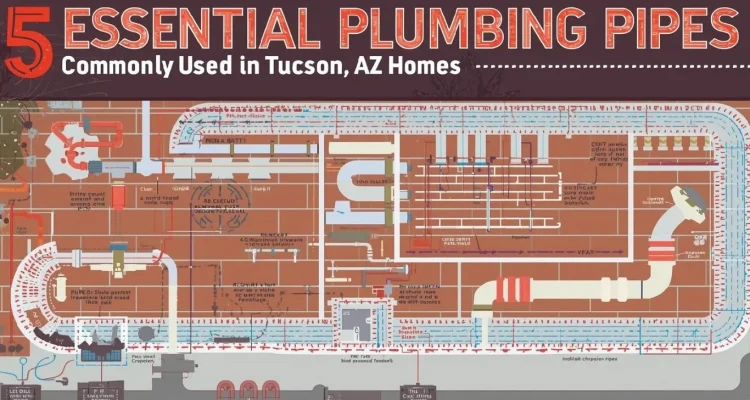
In Tucson, AZ homes, common plumbing pipes include copper for durability, PEX for flexibility and easy installation, PVC/CPVC for drainage and hot/cold water, galvanized steel in older homes, and cast iron for sewer lines. Choice depends on home age, water quality, and local plumbing codes.
Introduction: What Plumbing Pipe Is Used in Houses in Tucson, AZ
If you’ve ever faced a leaky faucet or burst pipe in Tucson, AZ, you know that plumbing materials make all the difference. Understanding what plumbing pipe is used in houses in Tucson can save you headaches, money, and unexpected water damage. From traditional copper to modern PEX, each material has its quirks, advantages, and a story to tell. Let’s dive in, pipe wrench in hand, and break it all down so you can feel confident about your home’s plumbing.
Why Choosing the Right Pipe Material Matters
The right pipe keeps water flowing safely, prevents leaks, and ensures long-term durability. Tucson’s dry climate, hard water, and seasonal temperature swings make this choice even more critical. Using the wrong material can mean corrosion, leaks, and costly replacements.
Overview of Common Plumbing Materials Used in Tucson
Tucson homes typically feature a mix of:
- Copper
- PEX
- PVC / CPVC
- Galvanized steel
- Cast iron
Each has its own applications, pros, and cons, depending on whether it’s for water supply or drainage.
Copper Pipes: Features, Benefits, and Drawbacks
Copper is a classic choice for water supply.
Benefits
- Extremely durable (50+ years lifespan)
- Resistant to bacteria and corrosion
- Handles high water pressure and temperature changes
Drawbacks
- Expensive compared to other options
- Requires soldering skills for installation
- Can corrode with highly acidic water
Types of Copper Pipes
- Type K: Thickest, used for underground lines
- Type L: Common residential interior plumbing
- Type M: Thinner, least expensive, used in light-duty applications
PEX Pipes: Flexibility and Advantages for Modern Homes
PEX (cross-linked polyethylene) is increasingly popular in Tucson.
Advantages
- Flexible and easy to install, even in tight spaces
- Resistant to freezing (great for occasional cold snaps)
- Fewer joints, reducing leak points
Installation and Maintenance Tips
- Use proper fittings and clamps
- Avoid UV exposure; PEX degrades in sunlight
- Inspect annually for leaks at connections
PVC Pipes: Where They Are Used and Why They’re Popular
PVC and CPVC are common for drainage, vent, and cold/hot water lines.
Differences Between PVC and CPVC
| Feature | PVC | CPVC |
|---|---|---|
| Water Type | Cold | Hot and cold |
| Temperature Tolerance | Low | Higher |
| Cost | Low | Slightly higher |
| Durability | Moderate | High |
- Easy to cut, glue, and install
- Corrosion-resistant
- Lightweight and affordable
Galvanized Steel Pipes: Older Homes and Replacement Considerations
Many Tucson homes built before the 1970s still have galvanized steel pipes.
Identifying Galvanized Pipes
- Gray or silver-colored metal
- Heavier and threaded at joints
- Often found in original water supply lines
Pros and Cons
- Durable, strong, but prone to rust and corrosion
- Can clog over time, reducing water pressure
- Often replaced with copper or PEX during renovations
Cast Iron Pipes: Uses in Drainage and Sewer Systems
Cast iron is primarily used for sewer and drainage lines in Tucson.
Advantages
- Extremely durable, quiet, and fire-resistant
- Handles heavy loads and pressure changes
Drawbacks
- Heavy and difficult to install
- Can corrode if exposed to acidic soil or water
- More expensive than PVC for replacement
Comparing Pipe Lifespan
| Pipe Type | Average Lifespan | Notes |
|---|---|---|
| Copper | 50+ years | Durable but pricey |
| PEX | 40–50 years | Flexible and easier to install |
| PVC/CPVC | 25–40 years | Cost-effective for drainage and water |
| Galvanized Steel | 40–50 years | Prone to rust over time |
| Cast Iron | 75+ years | Often lasts decades if maintained |
Factors Affecting Pipe Choice in Tucson
- Water quality (hardness and pH)
- Home age and existing infrastructure
- Local plumbing codes and inspections
- Climate and temperature fluctuations
Signs Your Home Plumbing Needs Replacement or Upgrades
- Low water pressure
- Frequent leaks or corrosion
- Discolored water
- Strange odors from drains
- Unusual noises in pipes
How to Choose the Best Pipe Material for Your Tucson Home
- Evaluate current system and age of pipes
- Consider water quality and pressure
- Decide between longevity, cost, and installation ease
- Consult a licensed plumber for local code compliance
Maintenance Tips for Different Types of Pipes
- Copper: Check for greenish corrosion, ensure joints are tight
- PEX: Inspect fittings annually, avoid sunlight
- PVC/CPVC: Check glue joints, avoid cracks from freezing
- Galvanized: Monitor rust, replace when pressure drops
- Cast Iron: Inspect for leaks, especially at joints and buried sections
Hiring a Professional vs DIY
While small repairs are manageable, major plumbing changes in Tucson should involve a licensed plumber. Local codes and hot water/cold water systems require expertise.
Environmental Considerations
- Copper and cast iron are recyclable
- PVC/CPVC is less eco-friendly
- PEX is semi-recyclable but highly durable, reducing replacements
Future Trends in Residential Plumbing Pipes
- Increased PEX adoption due to flexibility and ease
- Smart water systems integrating with copper or PEX
- Eco-friendly materials and recycling emphasis
Frequently Asked Questions
What type of pipe is most common in Tucson homes?
Copper and PEX are the most common for water supply, while PVC/CPVC and cast iron handle drainage.
Are galvanized pipes still used in Tucson?
Mostly in older homes; new construction rarely uses galvanized steel.
Can I switch my copper pipes to PEX?
Yes, many homeowners replace aging copper with PEX for flexibility and cost savings.
How long do Tucson plumbing pipes last?
Lifespan varies: copper 50+ years, PEX 40–50, PVC/CPVC 25–40, galvanized steel 40–50, cast iron 75+.
Do Tucson homes need special pipes because of climate?
Not specifically, but PEX and copper handle seasonal temperature changes well, making them popular.
Final Summary
Choosing the right plumbing pipe in Tucson, AZ is crucial for water quality, durability, and cost-efficiency. Copper and PEX dominate modern homes, PVC/CPVC handles drainage, and older homes may still have galvanized or cast iron. Evaluate your home’s needs, consider longevity and local codes, and maintain your pipes properly to ensure a reliable plumbing system. Making informed choices now can save years of headaches—and a lot of water damage.

You must be logged in to post a comment.